8 Powerful Fermentation Breakthroughs: Hope & Risks
Introduction to Fermentation Breakthroughs
Fermentation Breakthroughs are changing how scientists produce food, medicines, sustainable materials, and alternative proteins. Traditional fermentation has been used for thousands of years to make bread, yogurt, cheese, and other foods. Today, advanced biotechnology is helping researchers use microorganisms such as bacteria, yeast, and fungi to create products with new properties and potentially lower environmental impacts. These developments offer hope for a more sustainable future, but they also raise important questions about cost, safety, energy use, and large-scale production.
Modern fermentation research combines biology, engineering, artificial intelligence, and precision manufacturing. Scientists can select useful microorganisms, adjust their growing conditions, and improve the way they produce valuable ingredients. Although many applications are still developing, Fermentation Breakthroughs could reshape several industries over the coming years.

Table of Contents
- Precision Fermentation for Alternative Proteins
- Fermentation Breakthroughs in Sustainable Food Production
- Microbial Production of Medicines
- Fermentation for Sustainable Materials
- AI-Powered Fermentation Systems
- Agricultural Waste and Industrial Fermentation
- Fermentation for Environmental Protection
- The Hidden Risks of Fermentation Technology
- Comparison Table
- Future Outlook and Conclusion
1. Precision Fermentation for Alternative Proteins
Precision fermentation is one of the most promising Fermentation Breakthroughs in food biotechnology. It uses selected microorganisms to produce specific ingredients, such as proteins, enzymes, and fats. Scientists provide these microorganisms with suitable nutrients and controlled conditions so they can manufacture a desired substance.
One important application is the production of proteins similar or identical to certain proteins found in animal milk. These ingredients may be used to develop dairy alternatives without relying on conventional dairy farming for the production of that particular ingredient. Precision fermentation can also produce enzymes that improve food processing and manufacturing.
The technology could help diversify the global protein supply and reduce dependence on some resource-intensive production systems. However, its environmental benefits depend on the electricity source, feedstock, manufacturing efficiency, and purification requirements. Products may also be expensive while facilities are still developing.
2. Fermentation Breakthroughs in Sustainable Food Production
Fermentation Breakthroughs are helping researchers explore new ways to produce nutritious foods. Fungi, yeast, and bacteria can transform suitable raw materials into ingredients with different flavors, textures, and nutritional properties. Mycoprotein, for example, is produced using fungal fermentation and can serve as an ingredient in meat alternatives.

Fermentation can also improve certain food characteristics. Depending on the microorganism and process, it may enhance flavor, change texture, or reduce some undesirable compounds. Traditional fermented foods already demonstrate how microorganisms can make ingredients more useful and appealing.
Newer fermentation methods aim to improve consistency and production efficiency. Controlled temperature, acidity, oxygen supply, and nutrient levels allow manufacturers to manage microbial growth more precisely.
Nevertheless, sustainable food production requires more than an efficient fermentation tank. Manufacturers must consider the full supply chain, including the source of nutrients, water use, packaging, transportation, and energy consumption. Consumers also need clear ingredient information and appropriate allergen labeling.
3. Microbial Production of Medicines
Another major area of Fermentation Breakthroughs is pharmaceutical manufacturing. Microorganisms have long been used to produce antibiotics, enzymes, and other valuable compounds. Modern biotechnology has expanded these capabilities by enabling carefully selected or genetically engineered organisms to produce complex substances.
Some medicines and therapeutic ingredients are manufactured through microbial or cell-based production systems. Fermentation can support reliable production when scientists understand the organism, control contamination, and maintain consistent operating conditions.
This technology is especially important because pharmaceutical ingredients often require strict quality standards. Manufacturers must test the purity, strength, stability, and safety of their products. Even small changes in production conditions can affect the final material.
Although microbial production can improve manufacturing options, it does not automatically make medicines cheaper or easier to distribute. Research, regulatory approval, quality control, and specialized facilities remain important costs. Still, advances in fermentation could expand the range of biologically produced ingredients available to medicine.
4. Fermentation for Sustainable Materials
Fermentation Breakthroughs are also supporting research into materials that may reduce reliance on petroleum-based manufacturing. Certain microorganisms can produce organic acids, polymers, enzymes, and other compounds used as building blocks for industrial products.
Some of these compounds can be processed into bioplastics, fibers, coatings, or packaging materials. The advantage is that suitable biological feedstocks may replace some fossil-based raw materials. Researchers are working to improve yields, reduce processing costs, and create materials with useful mechanical properties.
However, a material described as bio-based is not necessarily biodegradable. Its environmental performance depends on its chemical structure, production process, disposal conditions, and available recycling systems. Some bio-based plastics require industrial composting facilities, while others may persist in the environment.
For this reason, manufacturers need to evaluate the entire life cycle of a material rather than relying on the word “biological” as proof that it is environmentally friendly.
5. AI-Powered Fermentation Systems
Artificial intelligence is creating new opportunities for Fermentation Breakthroughs. Modern fermentation facilities generate large amounts of data about temperature, acidity, oxygen, pressure, nutrient consumption, and microbial activity. AI tools can analyze these measurements to help researchers identify patterns and improve production conditions.
Machine-learning systems may help estimate when a fermentation process is slowing down or identify operating conditions associated with higher yields. Digital models can also help researchers compare possible production settings before conducting expensive physical experiments.
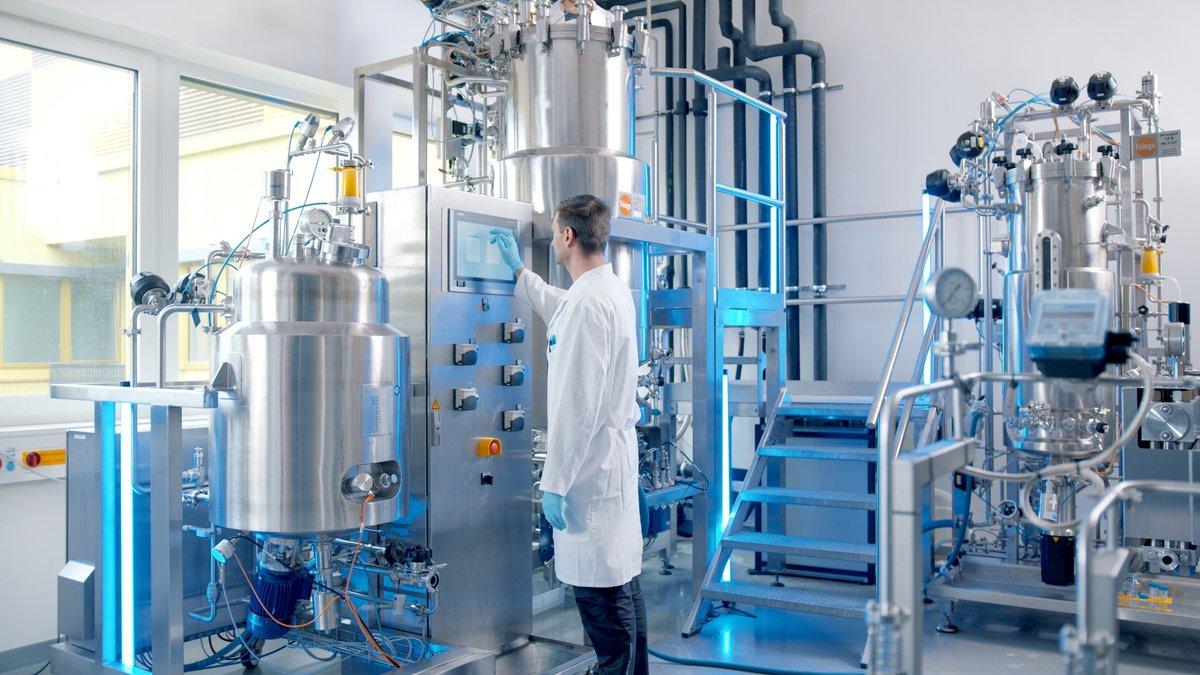
Automation offers another advantage. Sensors can continuously monitor a bioreactor, while control systems adjust selected conditions to maintain a target environment. This may improve consistency and reduce some production errors.
However, AI systems are only as reliable as their data, models, and validation procedures. Biological systems can behave unpredictably, and a model trained on one organism or facility may not work equally well in another. Human expertise, laboratory testing, and careful monitoring remain essential.
6. Agricultural Waste and Industrial Fermentation
Agricultural residues such as certain plant fibers and food-processing by-products may provide raw materials for fermentation. Instead of treating every residue as waste, researchers are exploring how suitable materials can be converted into useful chemicals, fuels, enzymes, or microbial products.
This approach could create additional value from existing agricultural supply chains. For example, microorganisms may convert sugars obtained from processed biomass into useful compounds. Some processes can also use by-products from food manufacturing, provided the materials are safe and suitable for the intended application.
A major challenge is that plant waste often contains complex structures that are difficult for microorganisms to use directly. Pretreatment may be needed to release fermentable sugars, and this step can require energy, chemicals, and extra equipment.
Successful systems must therefore balance the cost of collecting and processing the raw material against the value of the final product. When the process is efficient and the feedstock is locally available, fermentation may support more resource-efficient manufacturing.
7. Fermentation for Environmental Protection
Fermentation Breakthroughs may contribute to environmental protection by producing useful chemicals with biological processes and supporting the treatment of certain waste streams. Microorganisms are already important in wastewater treatment, composting, and the breakdown or transformation of specific pollutants.
Researchers are also investigating biological routes for producing fuels and chemicals that could replace selected fossil-derived products. In some cases, fermentation can convert renewable feedstocks into compounds used by other industrial processes.
The environmental benefits vary widely. A process may reduce dependence on fossil resources but still require substantial electricity, water, or purification. Transporting bulky feedstocks over long distances can also reduce potential benefits.
Environmental assessments should compare a new fermentation process with the actual alternative it would replace. They should measure emissions, water consumption, land use, waste generation, and end-of-life impacts. This broader approach helps identify which technologies deliver measurable benefits rather than simply promising them.
8. The Hidden Risks of Fermentation Technology
Despite its potential, Fermentation Breakthroughs come with challenges that researchers and manufacturers must address. One concern is contamination. Unwanted microorganisms can enter a production system and disrupt growth, reduce yields, or compromise product quality. Maintaining clean equipment and validated procedures is therefore essential.
Another challenge is economic scalability. A promising laboratory experiment may not remain affordable when production expands to industrial volumes. Large bioreactors require reliable control systems, trained staff, raw materials, energy, and downstream processing equipment.
Consumer acceptance is also important. Some people may have concerns about genetically engineered microorganisms or unfamiliar ingredients. Clear labeling, transparent safety assessments, and understandable explanations can help consumers make informed decisions.
Environmental claims require similar care. Fermentation does not guarantee low emissions, low water use, or biodegradability. Its benefits depend on the specific organism, feedstock, energy supply, manufacturing design, and product use.
Finally, responsible production requires effective quality control and compliance with applicable regulations. Strong oversight can help protect workers, consumers, and the environment while allowing useful innovations to develop.
9. Fermentation Breakthroughs Comparison Table
The following table summarizes major applications and the main considerations associated with each area.
| Fermentation technology | Potential benefit | Main challenge |
|---|---|---|
| Precision fermentation | Produces targeted proteins and ingredients | Cost and purification |
| Food fermentation | Creates alternative proteins and new foods | Consumer acceptance and scale |
| Pharmaceutical fermentation | Produces valuable biological ingredients | Strict quality requirements |
| Material fermentation | Provides alternatives to some fossil-based inputs | Cost and end-of-life management |
| AI-powered fermentation | Helps optimize production conditions | Data quality and validation |
| Agricultural waste fermentation | Adds value to selected by-products | Feedstock pretreatment |
| Environmental applications | Supports selected waste-treatment processes | Proving real-world environmental benefits |
10. Future Outlook for Fermentation Breakthroughs
The future of Fermentation Breakthroughs will depend on scientific progress as well as practical manufacturing improvements. Better microorganisms, more efficient bioreactors, improved sensors, and lower-cost purification systems may help bring additional products to market.
Researchers are also likely to explore combinations of fermentation with other technologies. AI-assisted experiments may speed up the search for productive microorganisms, while renewable electricity could reduce emissions in facilities that consume substantial energy. New methods for using agricultural by-products may help improve resource efficiency where suitable feedstocks are available.
However, not every promising laboratory result will become a successful commercial product. Technologies must compete on quality, price, reliability, safety, and environmental performance. Companies will need to demonstrate that their products provide meaningful advantages over existing alternatives.
Governments, scientists, manufacturers, and consumers all have a role in shaping this industry. Evidence-based regulation, responsible research, and transparent communication can help build trust without overlooking genuine risks.
Conclusion
Fermentation Breakthroughs are opening new possibilities in food production, medicine, sustainable materials, industrial biotechnology, and environmental management. Precision fermentation may help produce targeted ingredients, AI can support process optimization, and agricultural by-products may become valuable raw materials.
At the same time, contamination risks, energy requirements, manufacturing costs, regulatory obligations, and consumer concerns cannot be ignored. The most successful innovations will be those that combine scientific progress with reliable production and measurable benefits.
Fermentation is not a universal solution to every environmental or industrial problem. Nevertheless, when carefully designed and responsibly managed, these technologies could become an important part of a more resource-efficient future.