Category: TechResearch.info

  • 8 Powerful PFAS Removal Technologies: Hope & Hidden Risks

    8 Powerful PFAS Removal Technologies: Hope & Hidden Risks

    PFAS Removal Technologies are becoming increasingly important as scientists, water treatment experts, and environmental researchers search for effective ways to reduce persistent chemicals in drinking water and contaminated environments. PFAS, commonly known as per- and polyfluoroalkyl substances, are a large group of synthetic chemicals used in products such as nonstick cookware, stain-resistant fabrics, and certain industrial materials. Because many PFAS break down very slowly, they can remain in the environment for long periods. Modern PFAS Removal Technologies offer hope for cleaner water and reduced exposure, but challenges involving cost, waste disposal, energy use, and complete chemical destruction remain. Understanding these technologies can help communities recognize both their potential benefits and their limitations.

    Table of Contents: PFAS Removal Technologies

    1. Introduction to PFAS Removal Technologies
    2. PFAS Removal Technologies Using Activated Carbon
    3. PFAS Removal Technologies Using Ion Exchange Resins
    4. PFAS Removal Technologies Using Reverse Osmosis
    5. PFAS Removal Technologies Using Nanofiltration
    6. PFAS Removal Technologies Using Electrochemical Treatment
    7. PFAS Removal Technologies Using Plasma Technology
    8. PFAS Removal Technologies Using Advanced Oxidation and Heat
    9. PFAS Removal Technologies: Hope and Hidden Risks
    10. Conclusion on PFAS Removal Technologies

    1. Introduction to PFAS Removal Technologies

    PFAS are widely studied because their chemical structures can make many of them resistant to natural degradation. Some PFAS have been detected in groundwater, rivers, soil, and drinking water sources. Exposure to certain PFAS has been associated with health concerns, although risks vary by chemical, exposure level, and individual circumstances.
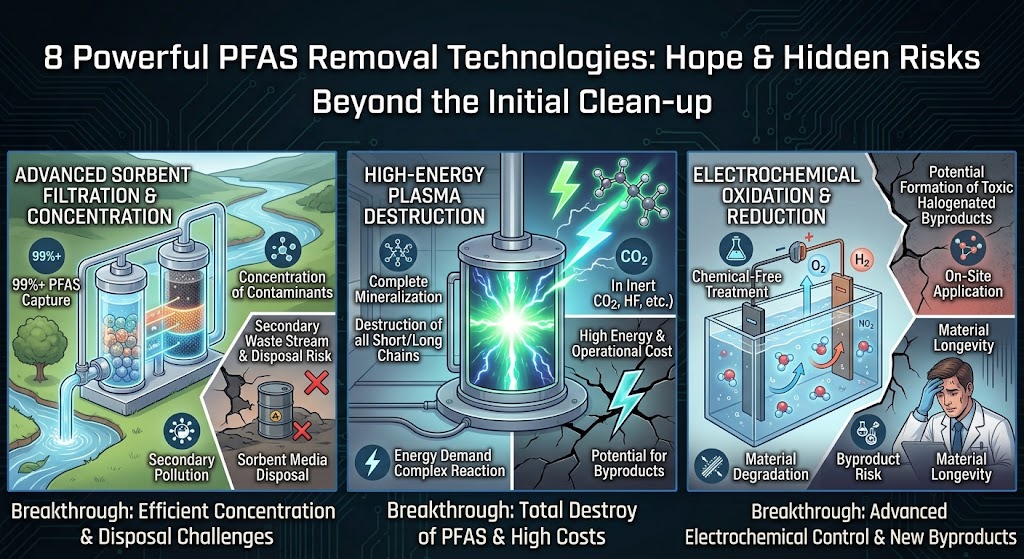
    Removing PFAS from water is challenging because these substances can occur at very low concentrations. Different PFAS also behave differently depending on their molecular size, electrical charge, and chemical structure.

    Scientists have developed several treatment approaches to address these problems. Some technologies capture PFAS and separate them from water, while others aim to break down the chemicals themselves. This distinction is important because removing PFAS from water does not necessarily destroy them.

    The most suitable treatment depends on the type of PFAS present, the amount of water being treated, local water chemistry, treatment costs, and how the resulting waste will be managed.

    2. PFAS Removal Technologies Using Activated Carbon

    Activated carbon is one of the established approaches used to reduce certain PFAS in contaminated water. It contains a highly porous structure with a large internal surface area, allowing chemicals to attach to its surface through a process called adsorption.

    Granular activated carbon is commonly used in water treatment systems. Water passes through a bed of carbon, where some PFAS are retained while treated water continues through the system.

    PFAS Removal Technologies and Carbon Filtration

    Activated carbon can be effective for many longer-chain PFAS, including certain compounds that have been widely monitored in drinking water. However, its performance depends on the specific chemical, carbon characteristics, competing substances, and operating conditions.

    Some shorter-chain PFAS can pass through carbon filters more readily than longer-chain compounds. As a result, treatment systems need appropriate design, monitoring, and timely replacement or regeneration of the carbon.

    Used carbon also requires careful management. PFAS captured on the material do not automatically disappear. Depending on the treatment facility and applicable regulations, the carbon may be regenerated, treated, or disposed of through an appropriate waste-management process.

    Despite these challenges, activated carbon remains an important option because it can be integrated into established water treatment infrastructure.

    3. PFAS Removal Technologies Using Ion Exchange Resins
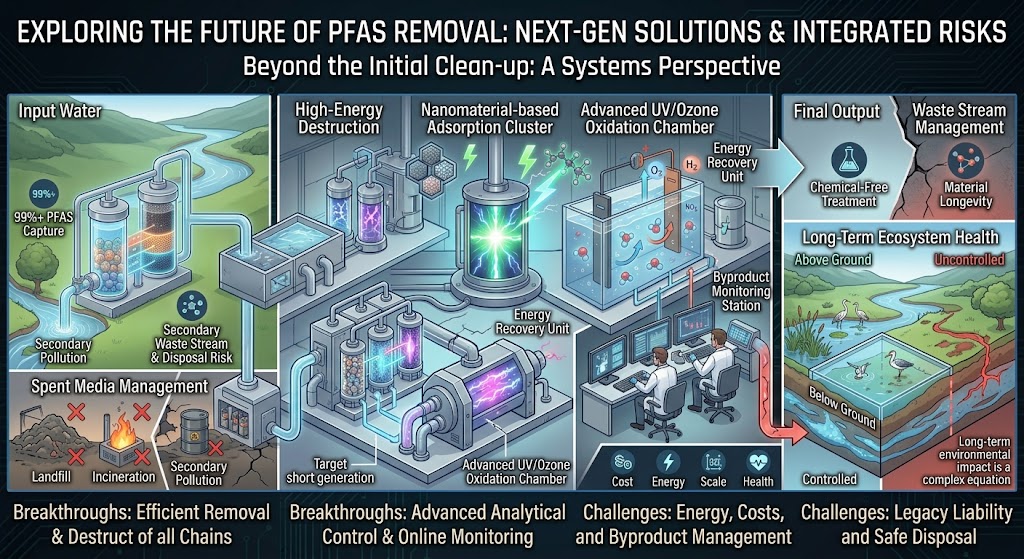
    Ion exchange resins are specially designed materials that can capture certain charged contaminants from water. Some resins have been developed to remove PFAS more efficiently than conventional filtration media under suitable conditions.

    Water flows through a container filled with resin beads. The material interacts with PFAS and retains them, reducing their concentration in the water leaving the treatment unit.

    PFAS Removal Technologies and Selective Resins

    Certain anion exchange resins are particularly useful for capturing negatively charged PFAS. Their effectiveness depends on resin chemistry, water composition, and the particular PFAS being targeted.

    In some applications, ion exchange can provide high removal performance and may require a smaller treatment footprint than some alternative systems. It can also be combined with activated carbon or other treatment methods.

    However, other dissolved substances can compete for binding sites. Resin performance may decline as the material becomes saturated, making monitoring and replacement essential.

    Spent resin can contain concentrated PFAS and therefore requires careful handling. Regeneration may produce a concentrated waste stream that still needs further treatment. The resin itself does not necessarily destroy the chemicals it captures.

    Ion exchange is promising for appropriately designed systems, but its overall environmental value depends on both water treatment performance and safe management of the resulting waste.

    4. PFAS Removal Technologies Using Reverse Osmosis

    Reverse osmosis uses a semipermeable membrane and applied pressure to separate many dissolved substances from water. It is already used in applications such as desalination and drinking water purification.

    When water is forced through a suitable membrane, many PFAS molecules are retained in a concentrated stream, while the treated water passes through.

    PFAS Removal Technologies and Membrane Filtration

    Reverse osmosis can achieve high removal of many PFAS under appropriate operating conditions. Its performance depends on the membrane, the chemical properties of the PFAS, and the quality of the incoming water.

    One important advantage is that reverse osmosis can remove a broad range of dissolved contaminants, not only PFAS. This may be useful where several water-quality problems occur together.

    However, reverse osmosis has important limitations. It consumes energy to pressurize water, requires maintenance, and produces a concentrated reject stream containing PFAS and other substances.

    That concentrated waste must be managed safely. If it is discharged without suitable treatment, PFAS can simply move from one part of the water system into another.

    Membrane treatment therefore needs a complete waste-management strategy. High removal from the treated water is valuable, but it does not mean the captured chemicals have been destroyed.

    5. PFAS Removal Technologies Using Nanofiltration

    Nanofiltration is another membrane-based process that can help reduce PFAS in water. Its separation characteristics differ from those of reverse osmosis, and its performance varies depending on membrane design and water chemistry.

    Nanofiltration membranes can retain many dissolved substances based on molecular size, charge, and interactions with the membrane. Certain systems can remove selected PFAS while allowing some smaller dissolved components to pass through.

    PFAS Removal Technologies for Efficient Water Treatment

    Researchers are investigating how nanofiltration can balance contaminant removal, energy consumption, and water recovery. In suitable applications, it may provide an alternative to reverse osmosis when the overall treatment requirements permit.

    Nevertheless, nanofiltration does not perform identically for every PFAS. Some compounds may be retained more effectively than others, and dissolved salts or organic matter can affect performance.

    Like reverse osmosis, nanofiltration generates a concentrated stream that requires proper management. Membrane fouling can also reduce efficiency and increase maintenance needs.

    The technology may become more useful as membrane materials improve, but decisions should be based on independent testing and the specific contamination problem rather than broad claims that one membrane can remove every PFAS.

    6. PFAS Removal Technologies Using Electrochemical Treatment

    Electrochemical treatment is an emerging area of PFAS research. These systems use electrical energy and specially designed electrodes to encourage chemical reactions that may transform or break down selected PFAS.

    Unlike conventional filtration, which primarily separates contaminants from water, some electrochemical approaches aim to destroy them.

    PFAS Removal Technologies and Chemical Breakdown

    Researchers are investigating electrode materials, electrical conditions, and reactor designs that can improve the degradation of persistent chemicals. Certain laboratory studies have demonstrated that electrochemical processes can break down some PFAS under controlled conditions.

    However, performance varies considerably by compound and treatment conditions. Some PFAS are more resistant than others, and incomplete treatment may leave intermediate products or residual contamination.

    Energy consumption, electrode durability, water composition, and treatment costs are also important considerations. A system that works well with a small laboratory sample may not be equally effective at a large water treatment facility.

    Before electrochemical technologies can be widely adopted, researchers need reliable evidence about destruction efficiency, unwanted byproducts, operating costs, and long-term performance.

    These technologies offer an important research direction because they seek to address the underlying chemical persistence of PFAS rather than simply transferring the contaminants into another material.

    7. PFAS Removal Technologies Using Plasma Technology

    Plasma-based treatment is another developing approach that scientists are investigating for PFAS destruction. Plasma contains energetic particles and reactive species that can initiate chemical reactions under suitable conditions.

    Some experimental systems use plasma in or above contaminated water to target certain persistent compounds. Researchers are studying how these systems interact with PFAS and whether they can break down contaminants efficiently.

    PFAS Removal Technologies and Reactive Plasma

    Laboratory studies have shown that some plasma processes can degrade selected PFAS. The results depend on reactor design, water conditions, chemical structure, treatment duration, and energy input.

    One area of interest is whether plasma treatment can reduce PFAS concentrations in contaminated liquid waste streams. These streams may be generated by other treatment technologies, including processes that concentrate PFAS from larger volumes of water.

    However, plasma treatment remains a developing field, and results from controlled experiments should not automatically be interpreted as proof of widespread commercial readiness.

    Scientists must measure not only the disappearance of the original PFAS but also the formation of transformation products and, where possible, the extent of mineralization into simpler substances.

    Energy efficiency, equipment costs, operational complexity, and scale-up remain important challenges. Plasma technology offers hope, but more testing is needed to establish where it can provide a practical advantage over existing treatment methods.

    8. PFAS Removal Technologies Using Advanced Oxidation and Heat

    Advanced oxidation processes use highly reactive chemical species to transform certain contaminants. Heat-based methods, including specialized thermal treatment, can also be investigated for managing PFAS-containing materials or concentrated waste.

    These approaches are not interchangeable, and their effectiveness depends on the specific process and PFAS involved.

    PFAS Removal Technologies and Advanced Oxidation

    Conventional advanced oxidation methods can be useful for many organic pollutants, but PFAS are unusually resistant to several common oxidation treatments. Standard approaches that work well for other contaminants may perform poorly against certain PFAS.

    Researchers are therefore exploring specialized combinations of reactive chemicals, catalysts, ultraviolet light, and other treatment conditions. The goal is to identify methods that can transform persistent compounds without creating unacceptable byproducts.

    Thermal treatment is also being studied and used in particular waste-management settings. Properly designed and operated systems may destroy certain PFAS-containing wastes, but temperature alone does not guarantee complete destruction under every condition.

    Treatment systems require appropriate monitoring, emissions controls, and verification that the process achieves its intended result. Inadequate treatment could leave residual PFAS or create other environmental concerns.

    These approaches illustrate why PFAS treatment requires chemistry-specific testing rather than assuming that one general-purpose method will work for every contaminant.

    9. PFAS Removal Technologies: Hope and Hidden Risks

    PFAS treatment is not a single-step problem. Different technologies can perform different roles, and some facilities may need multiple processes to meet water-quality goals.

    PFAS Removal Technologies and Their Main Benefits

    Activated carbon, ion exchange, reverse osmosis, and nanofiltration can reduce PFAS concentrations in treated water when correctly selected and operated. These methods can help protect drinking water supplies and manage contamination in suitable applications.

    Electrochemical treatment, plasma technology, and specialized destruction processes may help address concentrated PFAS waste or other difficult treatment streams. Continued research could improve efficiency and reduce the cost of handling persistent chemicals.

    PFAS Removal Technologies and Hidden Risks

    The biggest concern is confusing removal with destruction. A filter can produce cleaner water while leaving PFAS concentrated in spent carbon, resin, or reject water. That residual material must still be managed to prevent contamination from returning to the environment.

    Other challenges include energy consumption, treatment expenses, equipment maintenance, and differences in performance across PFAS compounds. Poorly designed systems may also create byproducts or fail to meet the required water-quality standards.

    Successful PFAS treatment requires testing the incoming water, selecting a suitable technology, monitoring treated water, and developing a safe plan for waste handling. Independent verification is particularly important when a supplier claims that a system eliminates all PFAS.

    The long-term goal is to combine effective contaminant removal, verified destruction where feasible, and responsible waste management. This approach offers a more complete solution than relying on filtration alone.

    10. Conclusion on PFAS Removal Technologies

    PFAS Removal Technologies are advancing efforts to reduce persistent chemical contamination in water and manage PFAS-containing waste. Activated carbon and ion exchange are established options, while reverse osmosis and nanofiltration can provide effective separation under suitable conditions. Electrochemical treatment, plasma processes, and specialized destruction methods offer additional possibilities that researchers continue to evaluate.

    Nevertheless, no single treatment method is ideal for every PFAS or every contaminated site. Performance, costs, energy use, and waste disposal all influence the overall outcome.

    The most promising future will combine reliable testing, suitable treatment systems, careful waste management, and continued scientific research. By distinguishing between capturing PFAS and actually destroying them, communities and water providers can make better-informed decisions and work toward cleaner water with fewer environmental risks.
  • 7 Powerful Brain-Computer Interface Breakthroughs: Hope & Risks

    Introduction to Brain-Computer Interface Breakthroughs

    Brain-Computer Interface Breakthroughs are changing how scientists explore the connection between the human brain and digital technology. These innovative systems can interpret certain brain signals and translate them into commands for computers, robotic devices, or communication tools. From helping people with paralysis communicate to enabling researchers to study new rehabilitation methods, brain-computer interfaces (BCIs) offer promising possibilities for the future.

    However, these technologies also raise important questions about privacy, safety, affordability, and the protection of highly personal brain data. Although research is advancing, many applications remain experimental and are not yet widely available. Understanding the major Brain-Computer Interface Breakthroughs can help us explore both their potential benefits and their hidden risks.

    This article examines seven important developments, their possible applications, and the challenges researchers must address before these technologies become more widely accessible.

    Table of Contents: Brain-Computer Interface Breakthroughs

    1. Brain-Computer Interface Breakthroughs for Communication
    2. Brain-Computer Interface Breakthroughs for Robotic Control
    3. Brain-Computer Interface Breakthroughs for Speech Restoration
    4. Brain-Computer Interface Breakthroughs for Stroke Rehabilitation
    5. Brain-Computer Interface Breakthroughs for Noninvasive Technology
    6. Brain-Computer Interface Breakthroughs for AI Integration
    7. Brain-Computer Interface Breakthroughs and Brain Data Privacy
    8. Benefits and Risks of Brain-Computer Interface Breakthroughs
    9. The Future of Brain-Computer Interface Breakthroughs
    10. Conclusion

    1. Brain-Computer Interface Breakthroughs for Communication

    One of the most meaningful Brain-Computer Interface Breakthroughs involves helping people who cannot speak or move easily communicate with others. Some people living with severe paralysis may understand language clearly but struggle to express their thoughts through conventional methods.

    Researchers are developing systems that detect patterns of brain activity associated with attempted movements, writing, or speech. Special computer models interpret these signals and convert them into text or synthesized speech.

    For example, experimental systems have enabled some participants with severe speech impairments to communicate through computer-generated words. These advances could help people with conditions such as amyotrophic lateral sclerosis (ALS) or certain forms of paralysis.

    The technology is not perfect. Accuracy may vary between individuals, and many systems require specialized equipment, calibration, and training. Nevertheless, improved communication could support independence, social interaction, and quality of life.

    2. Brain-Computer Interface Breakthroughs for Robotic Control

    Another major development allows users to control external devices through decoded brain signals. Brain-Computer Interface Breakthroughs in robotic control may help people with limited mobility operate computer cursors, robotic arms, or other assistive equipment.

    In experimental settings, researchers have demonstrated that certain brain signals can be translated into movement commands. A participant may attempt to move an arm, while a computer interprets the relevant neural activity and directs a robotic device.

    This approach could eventually support tasks such as reaching for objects, moving a cursor, or performing selected daily activities. It may provide additional independence for people whose physical movement is severely restricted.

    However, controlling a robotic device safely requires accurate signal interpretation, reliable hardware, and careful testing. Delays or incorrect commands can create practical challenges. Researchers must also improve comfort, affordability, and long-term reliability before these systems become routine assistive tools.

    3. Brain-Computer Interface Breakthroughs for Speech Restoration

    Speech restoration is an exciting area of Brain-Computer Interface Breakthroughs. Researchers are investigating ways to decode brain activity associated with intended speech and convert it into words or artificial voice output.

    Unlike conventional speech recognition, which analyzes sounds already spoken aloud, these experimental systems attempt to interpret neural activity related to speech production. Some approaches use implanted electrodes to collect detailed signals, while advanced computational models help translate those signals into language.

    This research could eventually provide another communication option for people who have lost the ability to speak because of neurological injuries or diseases.

    Nevertheless, decoding intended speech is technically difficult. Brain activity varies between individuals, and systems often need extensive training using participant-specific data. Current capabilities also differ significantly across research projects.

    Future progress will depend on better decoding accuracy, faster processing, comfortable interfaces, and strong safeguards that ensure people remain in control of when their neural activity is interpreted.

    4. Brain-Computer Interface Breakthroughs for Stroke Rehabilitation

    Stroke can affect movement, coordination, speech, and other essential abilities. Brain-Computer Interface Breakthroughs may contribute to rehabilitation by connecting a person’s brain activity with feedback or assisted movement.

    In some experimental rehabilitation approaches, a system detects signals associated with an intended movement. It then activates a robotic support device, functional electrical stimulation, or a visual feedback system. The aim is to help patients practise meaningful movements while receiving immediate feedback.

    This process may support motor learning and encourage the brain to reorganize some of its functions. Researchers are studying how these methods can complement conventional physical therapy.

    However, results depend on the individual, the type and severity of the stroke, and the rehabilitation programme. A BCI is not a guaranteed cure, and it should not replace professional medical assessment or established treatment without appropriate clinical guidance.

    More research is needed to determine which patients benefit most, how long improvements last, and which combinations of therapy provide the strongest outcomes.

    5. Brain-Computer Interface Breakthroughs for Noninvasive Technology

    Many advanced BCIs use electrodes implanted in or near the brain. Although these systems can collect relatively detailed signals, surgery introduces risks and requires specialized medical care.

    Noninvasive Brain-Computer Interface Breakthroughs offer a different approach. Electroencephalography (EEG), for example, measures electrical activity using sensors placed on the scalp. Other research methods use different external sensors to study brain activity.

    These systems avoid brain surgery and may be easier to set up, making them useful for selected communication, research, training, and accessibility applications.

    However, signals measured outside the skull are often weaker and more difficult to interpret than signals collected using implanted electrodes. Hair, movement, electrical interference, and differences between users can affect performance.

    The challenge is to improve accuracy without sacrificing convenience, affordability, or safety. Future noninvasive systems may become more practical as sensors, signal-processing methods, and machine-learning models improve.

    6. Brain-Computer Interface Breakthroughs for AI Integration

    Artificial intelligence is becoming an important part of Brain-Computer Interface Breakthroughs because neural signals are complex and vary over time. Machine-learning models can identify patterns in recorded brain activity and help translate those patterns into commands or communication outputs.

    AI-assisted decoding may improve how systems interpret attempted movements, intended speech, or particular mental tasks. It can also help researchers adapt interfaces to individual users.

    For example, a computer model may learn which patterns of neural activity correspond to a participant’s intended cursor movement. With appropriate training, the system may become more responsive to that person’s signals.

    Still, AI introduces its own challenges. A model may misinterpret signals, perform differently outside its training conditions, or depend on large amounts of personal data. Researchers must evaluate accuracy, transparency, reliability, and potential bias.

    The goal is not simply to create faster interfaces. It is to develop systems that work consistently, communicate their limitations, and allow users to understand and control how their information is processed.

    7. Brain-Computer Interface Breakthroughs and Brain Data Privacy

    As BCIs become more capable, protecting neural information will become increasingly important. Brain-Computer Interface Breakthroughs may involve collecting data that reveals patterns associated with movement, attention, or specific experimental tasks.

    This does not mean that current BCIs can freely read every thought or uncover every secret. Their capabilities are limited by the signals they measure, the tasks they are trained to recognize, and the design of the system.

    Nevertheless, neural data deserves careful protection because it can be sensitive and difficult to replace if exposed. Poor security practices could create risks involving unauthorized access, inappropriate sharing, or uses that participants never agreed to.

    Developers should minimize unnecessary data collection, use strong encryption, limit access, and clearly explain how information will be stored and shared. Participants should also understand consent procedures and their available choices.

    Privacy must be considered from the beginning of development rather than added after a product has already been introduced. Responsible safeguards will be essential for building public trust.

    Benefits and Risks of Brain-Computer Interface Breakthroughs

    Brain-Computer Interface Breakthroughs could provide meaningful benefits, particularly in communication, assistive technology, and rehabilitation. At the same time, their development involves technical, ethical, and financial challenges.

    The following table summarizes important opportunities and concerns.

    AreaPotential BenefitMain Risk or Limitation
    CommunicationAlternative ways to express words and messagesDecoding errors and limited availability
    Robotic controlGreater independence for some usersHardware complexity and safety concerns
    RehabilitationAdditional feedback during therapyBenefits may vary between patients
    Noninvasive systemsNo brain implant surgeryLower signal quality in many applications
    AI integrationImproved interpretation of neural signalsModel errors and data dependence
    PrivacyNew accessibility possibilitiesMisuse or unauthorized access to neural data
    Healthcare accessPotential new assistive optionsHigh costs and unequal availability

    The most responsible path forward balances innovation with careful testing, informed consent, accessibility, and strong privacy protection.

    Brain-Computer Interface Breakthroughs: Research Progress Graph

    The following conceptual graph compares broad areas of BCI development by their general research maturity. It is an illustrative overview, not a measured scientific ranking or a clinical effectiveness score.

    Illustrative research maturity (1–5)

    Noninvasive EEG research: █████ 5/5

    Experimental cursor control: ████ 4/5

    Implanted communication systems: ████ 4/5

    Speech decoding research: ███ 3/5

    Complex robotic control: ███ 3/5

    Routine everyday use across the population: █ 1/5

    These ratings are qualitative descriptions intended to distinguish established research methods from more demanding applications. A higher rating does not mean that a technology is widely available, approved for every use, or equally effective for all users.

    The Future of Brain-Computer Interface Breakthroughs

    The future of Brain-Computer Interface Breakthroughs will likely depend on improvements in sensors, computational models, medical engineering, and long-term reliability.

    Smaller devices could make some interfaces easier to use. Better algorithms may help systems interpret signals more accurately, while advances in rehabilitation science could improve how BCIs support selected therapeutic activities.

    Researchers will also need to investigate how well systems perform over months or years, whether they remain comfortable, and how their maintenance affects users. For implanted systems, surgical risks, device durability, and the possibility of complications require particular attention.

    Affordability is another major issue. A technology can be scientifically impressive but still have limited social impact if only a small number of people can access it. Lower costs, accessible designs, professional training, and appropriate healthcare support may help address this challenge.

    Ethical rules will be equally important. People should retain meaningful control over their devices and neural information. Researchers, manufacturers, healthcare professionals, and regulators must work together to establish standards for consent, security, and responsible use.

    Ultimately, progress should be measured not only by technical performance but also by whether these systems improve people’s lives safely and fairly.

    Conclusion: Brain-Computer Interface Breakthroughs Offer Hope and Risks

    Brain-Computer Interface Breakthroughs represent an important area of scientific research, connecting neuroscience, computing, engineering, and healthcare. Advances in communication, robotic control, speech restoration, rehabilitation, noninvasive sensing, and AI-assisted decoding could create valuable opportunities for people with specific disabilities.

    However, the technology still faces important limitations, including inconsistent performance, complex equipment, high costs, and privacy concerns. Many promising applications remain experimental, and their long-term benefits require further investigation.

    A better future for BCIs will depend on responsible research, rigorous clinical testing, strong data protection, and equitable access. With these priorities in place, brain-computer interfaces may become useful tools that help people communicate, interact with technology, and regain some independence while respecting human dignity and personal choice.

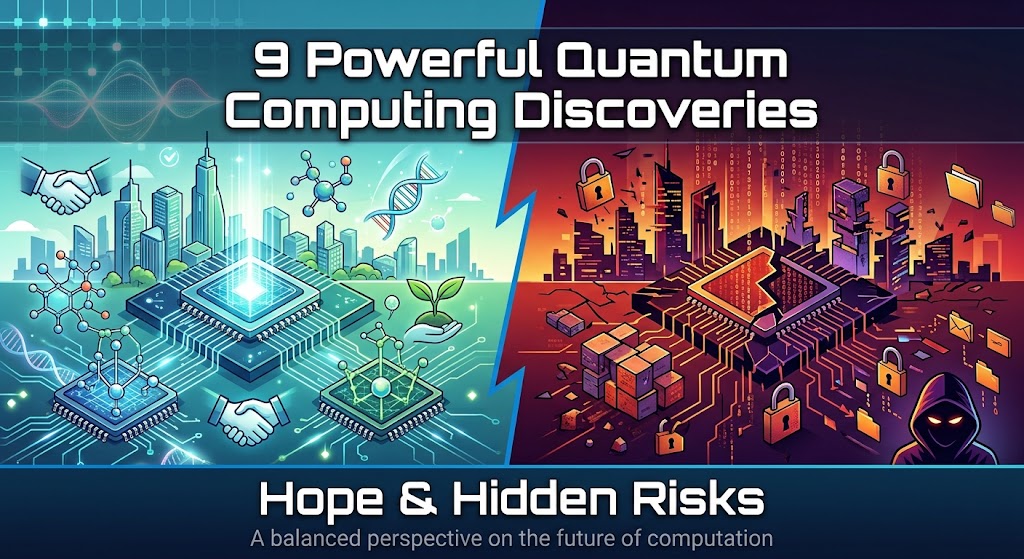
  • 9 Powerful Quantum Computing Discoveries: Hope & Hidden Risks

    9 Powerful Quantum Computing Discoveries: Hope & Hidden Risks

    Quantum Computing Discoveries are opening new possibilities for solving complex problems that traditional computers may struggle to handle. Researchers are exploring quantum processors, error correction, quantum algorithms, and new ways to simulate molecules and materials. These advances could eventually support drug research, chemistry, cybersecurity, and scientific discovery. However, Quantum Computing Discoveries also bring hidden risks, including technical limitations, high development costs, and potential threats to existing encryption systems. Understanding these developments helps readers separate genuine scientific progress from exaggerated claims about the future of quantum technology.

    Table of Contents: Quantum Computing Discoveries

    1. Introduction to Quantum Computing Discoveries
    2. Quantum Computing Discoveries in Qubit Technology
    3. Quantum Computing Discoveries in Error Correction
    4. Quantum Computing Discoveries in Quantum Algorithms
    5. Quantum Computing Discoveries in Drug Research
    6. Quantum Computing Discoveries in Materials Science
    7. Quantum Computing Discoveries in Cryptography
    8. Quantum Computing Discoveries in Quantum Networking
    9. Quantum Computing Discoveries in Quantum Simulation
    10. Quantum Computing Discoveries: Hope and Hidden Risks
    11. Conclusion on Quantum Computing Discoveries

    1. Introduction to Quantum Computing Discoveries

    Quantum computing is a developing field that uses principles of quantum physics to process information. Traditional computers use bits that represent either zero or one. Quantum computers use quantum bits, commonly called qubits, which can be prepared in combinations of quantum states.

    This difference allows quantum computers to approach certain calculations in ways that are fundamentally different from conventional computing. However, it does not mean quantum computers are automatically faster at every task. Their potential advantages depend on the problem, the algorithm, and the quality of the quantum hardware.

    Many important Quantum Computing Discoveries are focused on making quantum systems more reliable. Scientists are investigating how to control qubits, reduce errors, and connect quantum operations into useful calculations. These improvements are essential because quantum states are delicate and can be disturbed by unwanted interactions with their surroundings.

    2. Quantum Computing Discoveries in Qubit Technology

    Qubits are the foundation of quantum computing. Researchers are exploring several approaches to building them, including superconducting circuits, trapped ions, neutral atoms, and photonic systems. Each approach has different strengths and engineering challenges.

    Superconducting qubits can be controlled using microwave signals and fabricated using techniques related to modern electronics. Trapped-ion systems use electrically charged atoms controlled by electromagnetic fields and lasers. Neutral-atom systems use individual atoms arranged and manipulated with carefully controlled laser light, while photonic approaches use particles of light to carry quantum information.

    Quantum Computing Discoveries in More Reliable Qubits

    One major research goal is to create qubits that remain stable long enough to perform useful operations. Researchers also need to control qubits accurately and connect them in ways that support complex calculations.

    A system with many physical qubits is not necessarily more powerful than a smaller, better-controlled system. The quality of operations, connectivity, error rates, and ability to correct mistakes all influence performance.

    These Quantum Computing Discoveries are important because future quantum computers will need more than a large number of qubits. They will require reliable components that can work together consistently.

    3. Quantum Computing Discoveries in Quantum Error Correction

    Quantum information is vulnerable to noise. Small disturbances can introduce errors, and those errors may ruin the results of a calculation. This is one of the biggest obstacles facing practical quantum computing.

    Quantum error correction addresses this challenge by distributing quantum information across multiple physical qubits. Researchers use additional qubits and carefully designed measurements to detect error patterns without directly measuring and destroying the encoded quantum information.

    Quantum Computing Discoveries in Logical Qubits

    A logical qubit is an encoded unit of quantum information designed to be more reliable than its individual physical components. Depending on the system and error-correction method, multiple physical qubits may be needed to protect one logical qubit.

    Researchers have demonstrated important steps toward error correction, including experiments in which encoded quantum information becomes more reliable as protection improves. However, building a large, fault-tolerant quantum computer remains a substantial engineering challenge.

    The goal is to perform long calculations while keeping errors sufficiently low. Achieving this could allow quantum computers to tackle problems that are impractical for current quantum hardware.

    4. Quantum Computing Discoveries in Quantum Algorithms

    Quantum algorithms are procedures designed to use quantum operations to solve specific computational problems. Some theoretical algorithms offer important advantages over known classical approaches for particular tasks.

    Shor’s algorithm, for example, provides a theoretical method for factoring large integers efficiently on a sufficiently powerful fault-tolerant quantum computer. Grover’s algorithm can provide a quadratic speedup for certain unstructured search problems compared with standard classical search methods.

    Quantum Computing Discoveries in Practical Algorithms

    An algorithm that works mathematically is not necessarily ready for immediate practical use. Some require large numbers of reliable qubits and many precise operations. Today’s quantum hardware often struggles with the depth and error rates needed for demanding applications.

    Researchers are also investigating hybrid quantum-classical methods, where a quantum processor performs part of a calculation and a conventional computer handles other tasks. These methods are being explored in optimization, chemistry, and machine learning.

    The important question is whether a quantum approach can outperform the best available classical methods on a useful real-world task. Strong evidence requires fair comparisons, reproducible experiments, and clear measurements of computational costs.

    5. Quantum Computing Discoveries in Drug Research

    Drug development involves understanding how molecules interact, how chemical structures influence biological activity, and how potential treatments behave in complex systems. Quantum computing could eventually help researchers model some molecular processes more naturally than conventional approximations.

    Quantum systems follow the laws of quantum mechanics, which also govern the behavior of electrons and chemical bonds. This makes quantum simulation an attractive long-term application for chemistry and materials research.

    Quantum Computing Discoveries in Molecular Simulation

    Scientists are studying algorithms that could calculate molecular energy levels and other chemical properties. Such calculations may help researchers understand reaction mechanisms or evaluate the behavior of complex molecules.

    However, current quantum computers have limited capabilities, and many useful chemical calculations can already be performed with classical computing methods. A quantum approach must demonstrate meaningful improvements in accuracy, speed, or resource requirements before it can transform routine drug development.

    Quantum computers will not independently discover safe medicines without laboratory work. Experimental validation, biological studies, clinical trials, and regulatory review will remain essential.

    6. Quantum Computing Discoveries in Materials Science

    Materials science is another promising area for quantum computing. Researchers want to understand how atoms and electrons interact in materials used for batteries, electronics, solar cells, and industrial processes.

    These interactions can be difficult to simulate accurately because quantum systems may involve many particles whose behaviors are interconnected. Quantum computers could eventually help scientists model selected systems that challenge conventional computational approaches.

    Quantum Computing Discoveries for Better Materials

    Potential applications include investigating superconductors, catalysts, magnetic materials, and chemical reactions. Better simulations might help researchers narrow the list of materials worth synthesizing and testing in laboratories.

    For example, battery researchers need to understand how materials behave during charging, discharging, and chemical changes. Quantum calculations could contribute to this work if suitable algorithms and hardware become available.

    Nevertheless, there is no guarantee that quantum computing will quickly produce better batteries or cheaper industrial materials. Material performance also depends on manufacturing, durability, cost, and real-world operating conditions. Laboratory testing will remain central to confirming any discovery.

    7. Quantum Computing Discoveries in Cryptography

    Quantum computing has important implications for digital security. Many existing public-key cryptographic systems rely on mathematical problems that are difficult for conventional computers to solve efficiently.

    A sufficiently powerful, fault-tolerant quantum computer running Shor’s algorithm could threaten widely used public-key systems based on integer factorization or discrete logarithms. This includes RSA and elliptic-curve cryptography.

    Quantum Computing Discoveries and Encryption Risks

    This threat is serious, but it does not mean today’s quantum computers can immediately break all modern encryption. Current machines do not have the demonstrated fault-tolerant scale required to carry out the most demanding attacks on widely used cryptographic keys.

    Researchers and security organizations are preparing through post-quantum cryptography. These methods are designed to resist known attacks from both conventional and quantum computers.

    Organizations should assess which systems rely on vulnerable cryptography and plan how to replace or update those systems. This preparation matters because sensitive information captured today could potentially be decrypted in the future if it remains valuable and a capable attacker eventually obtains suitable quantum technology.

    8. Quantum Computing Discoveries in Quantum Networking

    Quantum networking explores how quantum information can be distributed between different locations. Researchers are investigating quantum communication links, entanglement distribution, quantum memories, and devices that may help connect separate quantum processors.

    Entanglement is a quantum phenomenon in which connected systems exhibit correlations that cannot be explained by ordinary classical models. It is a key resource in several quantum information protocols.

    Quantum Computing Discoveries in Secure Communication

    Quantum communication research includes quantum key distribution, which can allow communicating parties to detect certain kinds of eavesdropping under appropriate conditions. Such systems depend on specialized equipment, secure implementation, and trusted operating procedures.

    A quantum network is not simply a faster version of the internet. It would support different capabilities and would face engineering challenges involving signal loss, quantum memories, network components, and reliable distribution of entanglement.

    Researchers are working toward systems that can connect quantum devices over greater distances. Practical, large-scale quantum networks remain an active research goal rather than a universal replacement for conventional communications.

    9. Quantum Computing Discoveries in Quantum Simulation

    Quantum simulation uses controllable quantum systems to investigate the behavior of other quantum systems. It is one of the most natural potential applications because both the computer and the simulated subject follow quantum principles.

    Researchers can use quantum devices to study simplified models of magnetism, particle interactions, and other physical phenomena. Some experiments use specialized quantum simulators rather than fully programmable, general-purpose quantum computers.

    Quantum Computing Discoveries in Physics Research

    These experiments can help scientists explore questions about how quantum materials behave and how complex physical systems evolve. They may reveal patterns that are difficult to investigate using analytical mathematics or conventional simulation alone.

    However, simulation results must be interpreted carefully. Scientists need to validate experimental controls, estimate uncertainties, and compare results with established theories or other computational approaches whenever possible.

    Quantum simulation is promising because it may help researchers investigate physical processes that are expensive to model classically. Its ultimate value will depend on the complexity of the systems that can be simulated reliably and the new scientific knowledge those simulations provide.

    10. Quantum Computing Discoveries: Hope and Hidden Risks

    Quantum computing could eventually expand scientific capabilities, but several barriers remain. Hardware is expensive, quantum states are sensitive to noise, and reliable error correction requires substantial resources. There is also uncertainty about when particular commercial applications will become practical.

    Quantum Computing Discoveries and Future Opportunities

    The potential benefits include more advanced molecular simulations, improved understanding of selected materials, and new computational approaches for specific mathematical problems. Quantum technology may also contribute to specialized sensing and communication systems.

    These opportunities should be assessed individually. A successful laboratory demonstration does not automatically establish a commercial advantage, and a theoretical speedup does not guarantee lower costs for real-world applications.

    Quantum Computing Discoveries and Hidden Risks

    Security is one of the clearest concerns because sufficiently capable quantum computers could threaten some existing public-key cryptography. Another challenge is unequal access: specialized hardware, expert staff, and research infrastructure may remain concentrated in a small number of organizations.

    Environmental costs also deserve attention. Quantum processors require specialized equipment and carefully controlled operating environments, and the overall energy and resource requirements depend on the technology used.

    Responsible development requires transparent reporting, realistic performance claims, strong cybersecurity planning, and continued scientific testing. Public understanding is important too, because exaggerated claims can create confusion about what quantum computers can achieve today.

    11. Conclusion on Quantum Computing Discoveries

    Quantum Computing Discoveries are advancing the study of qubits, error correction, quantum algorithms, molecular simulation, materials science, cryptography, and quantum communication. These developments could eventually support important scientific and technological breakthroughs.

    However, the technology is still developing, and practical advantages will depend on reliable hardware, efficient algorithms, and evidence from real applications. Quantum computing will not replace conventional computers for every task, nor will every research result become a commercial product.

    The most promising future is one in which scientists continue testing bold ideas while addressing security, reliability, cost, and accessibility. By understanding both the opportunities and the limitations, readers can follow Quantum Computing Discoveries with informed expectations and a clearer view of what may come next.

  • 7 Powerful Virtual Cell Discoveries: Hope & Risks

    7 Powerful Virtual Cell Discoveries: Hope & Risks

    Table of Contents

    1. Introduction to Virtual Cell Discoveries
    2. What Are Virtual Cell Discoveries?
    3. Virtual Cell Discoveries in Drug Development
    4. Virtual Cell Discoveries and Personalized Medicine
    5. Virtual Cell Discoveries in Disease Research
    6. Virtual Cell Discoveries and Artificial Intelligence
    7. Virtual Cell Discoveries: Benefits and Risks
    8. Future of Virtual Cell Discoveries
    9. Conclusion

    Introduction to Virtual Cell Discoveries

    Virtual Cell Discoveries are opening exciting possibilities for modern biology by helping scientists understand how cells work through computer-based models. These models can combine biological information, mathematical simulations, and artificial intelligence to explore cellular behavior. Instead of relying entirely on laboratory experiments, researchers can use virtual cells to investigate how cells might respond to different conditions.

    The growing interest in Virtual Cell Discoveries offers hope for faster scientific research, improved drug development, and a deeper understanding of diseases. However, these technologies also face challenges, including incomplete biological data, inaccurate predictions, and high computational costs. Understanding both the opportunities and limitations is essential for using virtual cells responsibly.

    What Are Virtual Cell Discoveries?

    Virtual Cell Discoveries involve developing and studying computational representations of living cells. These representations may simulate selected cellular processes, such as gene activity, protein interactions, metabolism, and responses to environmental changes.

    A virtual cell does not necessarily reproduce every part of a real biological cell. Some models focus on one process, while more advanced systems attempt to connect multiple biological activities into a broader simulation.

    Scientists build these models using experimental measurements, biological databases, mathematical methods, and machine learning. They then compare model predictions with real observations to determine whether the simulations accurately represent biological behavior.

    This approach can help researchers generate hypotheses before conducting laboratory experiments. Nevertheless, virtual models are tools for scientific investigation rather than perfect replacements for living cells.

    Virtual Cell Discoveries in Drug Development

    One promising area for Virtual Cell Discoveries is drug development. Creating a new medicine can require years of research, extensive testing, and substantial financial investment. Researchers must understand how potential treatments affect biological systems and whether those effects could be harmful.

    Virtual cell models can help scientists investigate how a candidate drug might influence cellular pathways. Researchers may use simulations to identify possible mechanisms of action, compare treatment strategies, and determine which experiments deserve further investigation.

    For example, a model of a cancer cell could help researchers explore how changes in particular proteins might influence its response to a potential treatment. The predictions would still need experimental validation, but they could help scientists develop more focused research questions.

    Virtual Cell Discoveries may therefore improve the efficiency of early-stage drug research. They cannot independently establish that a medicine is safe or effective in humans, and clinical studies remain essential.

    Virtual Cell Discoveries and Personalized Medicine

    Personalized medicine aims to make healthcare decisions more appropriate for individual patients. People can respond differently to the same treatment because of genetic differences, medical histories, and other biological factors.

    Virtual Cell Discoveries could support this approach by helping scientists model how cellular systems respond to different conditions. When models incorporate reliable patient-specific information, researchers may investigate why a treatment works well for one person but less effectively for another.

    For instance, scientists could study how variations in a biological pathway influence the response of particular cells to a medicine. Such research may eventually contribute to better treatment selection and more targeted therapies.

    However, a virtual cell model cannot yet guarantee the best treatment for an individual patient. Human health involves complex interactions among many cells, tissues, organs, and environmental influences. More research is needed before many personalized virtual-cell applications can become routine clinical tools.

    Virtual Cell Discoveries in Disease Research

    Understanding disease requires scientists to examine changes in cellular behavior. Infections, cancer, metabolic disorders, and genetic conditions can involve complicated interactions among genes, proteins, and other cellular components.

    Virtual Cell Discoveries allow researchers to investigate some of these interactions within a computational environment. By changing one variable at a time, scientists can explore possible explanations for observed biological patterns and identify areas that require additional testing.

    In cancer research, for example, computational models may help investigate how signaling pathways influence cell growth. In infectious disease research, researchers may simulate selected interactions between pathogens and host cells.

    These approaches can generate useful hypotheses and reveal relationships that might otherwise be difficult to examine. However, the quality of the results depends on the model’s assumptions and the evidence used to build it. A simulation that overlooks an important biological mechanism may produce misleading conclusions.

    Virtual Cell Discoveries and Artificial Intelligence

    Artificial intelligence is becoming an important part of computational biology. Machine learning systems can analyze large biological datasets, recognize patterns, and help researchers predict relationships between cellular components.

    Virtual Cell Discoveries can benefit from these capabilities when AI tools are combined with established biological knowledge and experimental evidence. For example, machine learning may help estimate how gene activity changes under different conditions or identify patterns in cellular imaging data.

    AI-assisted models may also help scientists connect information from different experiments. This could make it easier to investigate complicated biological systems and develop new research hypotheses.

    Despite these advantages, AI predictions are not automatically correct. Models may learn biases from incomplete datasets or perform poorly when applied to biological conditions they have not encountered before. Independent testing, transparent methods, and expert review are necessary to assess the reliability of their results.

    Virtual Cell Discoveries: Benefits and Risks

    Virtual Cell Discoveries offer several potential benefits for scientific research. Computational experiments can allow researchers to test ideas before investing resources in laboratory studies. They may also help organize large amounts of biological information and identify promising directions for future experiments.

    Another advantage is the ability to investigate hypothetical scenarios that may be difficult to test directly. Scientists can adjust model parameters, compare possible outcomes, and study how selected biological processes interact.

    Nevertheless, these opportunities come with significant risks. A model may oversimplify living systems, rely on poor-quality data, or produce results that appear convincing without being biologically accurate. Researchers must also consider data privacy when patient-derived information is used to develop or evaluate models.

    The following table summarizes the main opportunities and challenges.

    Research areaPotential benefitMain limitation
    Drug developmentHelps prioritize experimentsPredictions need validation
    Personalized medicineExplores individual biological differencesPatient biology is highly complex
    Disease researchInvestigates cellular mechanismsModels may omit important factors
    AI-assisted biologyFinds patterns in large datasetsBiased data can affect predictions
    Laboratory planningHelps guide experiment designSimulations cannot replace all experiments

    Virtual Cell Discoveries: A Simple Research Potential Graph

    The following graph presents an illustrative comparison of how researchers might use virtual-cell approaches. The values are conceptual ratings from 1 to 5, not measured scientific results or proven performance statistics.

    Illustrative potential across research applications

    Drug research          █████  5
    Disease modeling       █████  5
    AI-assisted analysis   ████   4
    Personalized medicine  ████   4
    Clinical replacement   ██     2
    

    This illustration highlights areas where virtual cells may support research while emphasizing that direct clinical replacement remains limited. Actual performance depends on the specific model, biological question, and quality of available evidence.

    Future of Virtual Cell Discoveries

    The future of Virtual Cell Discoveries may involve models that represent increasingly complex biological processes. Researchers are working toward integrating information about genes, proteins, cellular structures, and environmental conditions into more connected computational systems.

    Better laboratory measurement techniques could provide more detailed information for building and testing these models. Advances in computing may also make complex simulations more practical for research institutions.

    Another important direction is the development of models that can be updated as new experimental evidence becomes available. Such systems could help scientists compare predictions with observations and refine their understanding of cellular behavior over time.

    However, progress will depend on collaboration between computational scientists, biologists, medical researchers, and data specialists. Reliable standards for testing, sharing, and evaluating models will be important for ensuring that results can be reproduced.

    Scientific advances should also be communicated carefully. A promising simulation is not the same as a confirmed discovery, and a successful cellular prediction does not automatically demonstrate a safe or effective treatment in humans.

    Conclusion: Virtual Cell Discoveries Offer Hope and Risks

    Virtual Cell Discoveries represent a promising direction for modern biological research. By combining computational modeling, artificial intelligence, and experimental data, scientists can explore cellular processes, investigate diseases, and identify potential directions for drug development.

    These technologies may help researchers use their time and resources more effectively while generating new questions about how living systems function. At the same time, incomplete data, model errors, privacy concerns, and limited biological complexity remain important challenges.

    The most effective approach is to combine virtual simulations with carefully designed laboratory experiments and appropriate clinical research. With responsible development and continued validation, Virtual Cell Discoveries could become increasingly valuable tools for understanding biology and supporting future medical innovation.

  • 9 Powerful AI Breakthroughs: Hope & Hidden Risks

    9 Powerful AI Breakthroughs: Hope & Hidden Risks

    Artificial intelligence is changing the way people work, learn, communicate, and solve complex problems. The latest AI Breakthroughs are creating new opportunities in medicine, scientific research, climate forecasting, robotics, and education. These developments offer hope for a smarter future, but they also raise important questions about privacy, safety, job security, and human control. Understanding these AI Breakthroughs can help readers discover how emerging technologies may improve everyday life while recognizing the risks that require careful attention 9 Powerful AI Breakthroughs: Hope & Hidden Risks.

    Table of Contents

    1. Introduction to AI Breakthroughs
    2. AI Breakthroughs in Medical Research
    3. AI Breakthroughs in Scientific Discovery
    4. AI Breakthroughs in Climate Prediction
    5. AI Breakthroughs in Personalized Education
    6. AI Breakthroughs in Robotics and Automation
    7. AI Breakthroughs in Drug Discovery
    8. AI Breakthroughs in Language and Communication
    9. AI Breakthroughs in Cybersecurity
    10. AI Breakthroughs: Hope, Risks, and the Future
    11. Conclusion

    1. Introduction to AI Breakthroughs

    Artificial intelligence has moved beyond simple digital assistants and basic automation. Modern AI systems can analyze enormous datasets, recognize patterns, generate content, and assist experts with complicated tasks. These abilities are making AI useful in fields where traditional methods may take significant time and resources 9 Powerful AI Breakthroughs: Hope & Hidden Risk.

    However, not every new AI development is a complete scientific breakthrough. Some technologies represent gradual improvements, while others introduce genuinely new capabilities. The most valuable AI Breakthroughs are those that solve real problems, produce measurable results, and provide benefits that people can access safely.

    Researchers are now exploring how AI can support scientific discoveries, improve public services, and make technology more accessible. At the same time, responsible development is becoming increasingly important because inaccurate outputs, biased decisions, and misuse can create serious consequences9 Powerful AI Breakthroughs: Hope & Hidden Risks.

    2. AI Breakthroughs in Medical Research

    Healthcare is one of the most promising areas for AI innovation. AI systems can examine medical images, organize patient information, and identify patterns that may be difficult to detect through conventional analysis alone. These capabilities can help qualified medical professionals investigate diseases and make more informed decisions 9 Powerful AI Breakthroughs: Hope & Hidden Risks.

    For example, AI-assisted image analysis can help researchers study signs of certain cancers and eye diseases. Instead of replacing doctors, these systems can provide additional information for trained professionals to review. Their usefulness depends on the quality of the training data, the clinical setting, and independent testing.

    AI Breakthroughs in Early Disease Detection

    Early detection can make a major difference in managing many medical conditions. AI tools can analyze scans and other clinical data to flag suspicious patterns that deserve further examination. In research environments, machine learning can also help identify possible relationships between symptoms, risk factors, and disease progression.

    Nevertheless, an AI prediction is not the same as a confirmed diagnosis. Systems can miss important signs or produce false alarms. Medical AI therefore requires clinical validation, privacy protection, and appropriate human oversight before it is trusted in patient care 9 Powerful AI Breakthroughs: Hope & Hidden Risks.

    3. AI Breakthroughs in Scientific Discovery

    Scientific research often involves analyzing millions of observations, testing hypotheses, and repeating experiments. AI can help researchers process complex datasets and identify promising directions for further investigation.

    One important example is protein structure prediction. AI systems have helped scientists predict many protein structures, providing useful information for biological research. Such predictions can support investigations into how proteins function and how they interact with other molecules 9 Powerful AI Breakthroughs: Hope & Hidden Risks.

    AI Breakthroughs in Faster Research

    AI tools can also help analyze astronomical observations, identify materials with desirable properties, and examine large scientific databases. Instead of manually reviewing every possibility, researchers can use computational models to narrow down the options that deserve experimental testing.

    Still, a computer-generated prediction does not automatically prove a scientific theory. Laboratory experiments, reproducible evidence, and expert review remain essential. The strongest AI Breakthroughs combine computational speed with careful scientific verification 9 Powerful AI Breakthroughs: Hope & Hidden Risks.

    4. AI Breakthroughs in Climate Prediction

    Climate change creates challenges for communities, governments, farmers, and emergency services. AI can help analyze weather observations, satellite images, and historical climate information to improve certain forecasting tasks.

    Machine learning models can identify patterns in atmospheric data and help produce forecasts more efficiently. These tools may support flood preparedness, wildfire monitoring, agricultural planning, and early-warning systems for extreme weather 9 Powerful AI Breakthroughs: Hope & Hidden Risks.

    AI Breakthroughs for Climate Risk Reduction

    AI-assisted forecasting can help decision-makers understand where risks may be increasing. Farmers may use improved weather information to plan irrigation, while emergency teams can combine forecasts with local information to prepare for dangerous conditions.

    However, AI does not eliminate uncertainty in weather and climate science. Forecast quality depends on reliable data, regional conditions, and the model being used. Climate models must also account for long-term physical processes that cannot be understood through pattern recognition alone 9 Powerful AI Breakthroughs: Hope & Hidden Risks.

    Another challenge is energy consumption. Training and operating large AI systems can require substantial electricity and water for cooling. Sustainable AI development should therefore consider both the environmental benefits of applications and the resources required to run them.

    5. AI Breakthroughs in Personalized Education

    Education is another field where AI can provide practical support. Intelligent learning platforms can adjust practice questions, explain concepts in different ways, and help students identify areas where they need more preparation 9 Powerful AI Breakthroughs: Hope & Hidden Risks.

    For instance, a student struggling with statistics may benefit from additional worked examples, while another student may prefer visual explanations. AI tutoring tools can provide immediate feedback and help learners study at their own pace.

    AI Breakthroughs for More Accessible Learning

    AI can also support translation, speech-to-text services, reading assistance, and educational content for learners with different needs. These features may help make information easier to access across languages and learning environments 9 Powerful AI Breakthroughs: Hope & Hidden Risks.

    Yet AI-generated explanations can contain errors. Students may also become too dependent on automated answers instead of developing independent thinking skills. Teachers and educational institutions should use AI as a supporting resource rather than a complete replacement for human guidance 9 Powerful AI Breakthroughs: Hope & Hidden Risks.

    Protecting students’ personal information is equally important. Educational platforms should explain how data is collected and avoid unnecessary tracking.

    6. AI Breakthroughs in Robotics and Automation

    Robotics combines artificial intelligence with machines that can sense their surroundings and perform physical tasks. Recent developments in computer vision, planning, and machine learning are helping robots work in more complex environments.

    Robots are already used in manufacturing, warehouses, agriculture, and some healthcare settings. AI can help them recognize objects, plan movements, and respond to changes in their surroundings 9 Powerful AI Breakthroughs: Hope & Hidden Risks.

    AI Breakthroughs in Real-World Automation

    In agriculture, intelligent machines may help identify weeds or monitor crops. In warehouses, robotic systems can support inventory movement and sorting. In dangerous environments, remotely operated or autonomous machines may reduce the need to expose workers to certain hazards.

    Despite these advantages, robots can make mistakes when lighting, obstacles, or surroundings differ from their training conditions. Physical automation also creates concerns about employment transitions and workplace safety 9 Powerful AI Breakthroughs: Hope & Hidden Risks.

    Successful adoption requires reliable testing, clear safety procedures, worker training, and realistic expectations about what a machine can accomplish.

    7. AI Breakthroughs in Drug Discovery

    Developing a new medicine is often expensive and time-consuming. Researchers must investigate potential compounds, evaluate biological effects, and conduct extensive testing to determine whether a treatment is safe and effective 9 Powerful AI Breakthroughs: Hope & Hidden Risks.

    AI can help analyze chemical structures, predict molecular properties, and identify compounds that may deserve further study. This can make some early stages of drug discovery more efficient by helping researchers prioritize promising candidates.

    AI Breakthroughs in Finding New Treatments

    Machine learning models may also help scientists explore existing medicines for new potential uses. By analyzing biological and clinical datasets, researchers can identify connections that might otherwise take longer to investigate.

    However, an AI-generated drug candidate is not automatically a successful medicine. Laboratory studies, clinical trials, safety assessments, and regulatory review are still necessary. AI can support the search for treatments, but it cannot remove the need for evidence that a medicine works safely in people 9 Powerful AI Breakthroughs: Hope & Hidden Risks.

    8. AI Breakthroughs in Language and Communication

    AI language models can generate text, summarize documents, translate languages, and answer questions. These capabilities are changing how people access information and communicate with digital services.

    Translation tools can help people understand content in languages they do not speak fluently. Speech recognition can convert spoken words into text, while text-to-speech systems can make written information more accessible 9 Powerful AI Breakthroughs: Hope & Hidden Risks.

    AI Breakthroughs and the Risk of Misinformation

    The same technology can produce convincing but incorrect information. AI-generated content may also be used to create misleading images, fake audio, or deceptive messages. This makes it important to verify sensitive claims and check original sources.

    Businesses, schools, and individuals should be especially careful when using AI-generated information for medical, legal, financial, or other high-impact decisions. Human review and clear disclosure can help build trust 9 Powerful AI Breakthroughs: Hope & Hidden Risks.

    9. AI Breakthroughs in Cybersecurity

    As more services move online, cyberattacks and digital fraud remain serious concerns. AI can help security teams examine network activity, detect unusual patterns, and prioritize alerts that may indicate a threat.

    For example, an AI system may identify suspicious login behavior or recognize activity that differs from a user’s normal pattern. These capabilities can help analysts investigate possible attacks more quickly 9 Powerful AI Breakthroughs: Hope & Hidden Risks.

    AI Breakthroughs Against Digital Threats

    AI-assisted security tools can support fraud detection, spam filtering, and the analysis of malicious software. They may also help organizations process large volumes of security information that would be difficult to review manually.

    However, attackers can use AI too. Automated phishing messages, impersonation attempts, and other forms of digital abuse can become more convincing. Security systems may also generate false alarms or miss unfamiliar attacks.

    Effective cybersecurity therefore requires multiple layers of protection, regular updates, secure authentication, trained staff, and human oversight. AI is one part of a wider defense strategy, not a guarantee of complete safety 9 Powerful AI Breakthroughs: Hope & Hidden Risks.

    10. AI Breakthroughs: Hope, Risks, and the Future

    The future of artificial intelligence will depend on how well society balances innovation with responsibility. AI may help researchers develop better tools, support scientific discovery, improve accessibility, and make some services more efficient 9 Powerful AI Breakthroughs: Hope & Hidden Risks.

    At the same time, several risks deserve serious attention. Biased training data can produce unfair outcomes. Poorly protected systems can expose sensitive information. Automated decisions may be difficult to explain, and some jobs may change as organizations adopt new technology.

    AI Breakthroughs and Responsible Innovation

    Responsible AI development involves testing systems before deployment, protecting personal data, monitoring performance, and providing ways for people to challenge important decisions. Researchers should also evaluate how systems behave in unfamiliar situations and communicate their limitations honestly.

    Governments, businesses, universities, and technology developers all have roles to play. Clear standards and public understanding can help ensure that useful innovations do not come at the expense of safety or fairness.

    The most meaningful progress will not simply involve creating more powerful AI. It will involve building systems that are reliable, transparent, useful, and aligned with human needs.

    11. Conclusion: AI Breakthroughs for a Better Future

    AI Breakthroughs are creating new possibilities in medicine, scientific research, climate forecasting, education, robotics, drug discovery, communication, and cybersecurity. These technologies can help people analyze information faster and explore solutions to complex problems.

    Nevertheless, their benefits are not automatic. AI systems can make mistakes, reflect bias, consume resources, and be misused. Careful testing, human judgment, privacy protection, and responsible governance remain essential.

    The future of AI will be shaped by the decisions people make today. By supporting evidence-based research and addressing risks early, society can encourage AI Breakthroughs that deliver meaningful benefits while protecting people and communities.

  • 8 Powerful Self-Driving Laboratory Breakthroughs: Hope & Risks

    8 Powerful Self-Driving Laboratory Breakthroughs: Hope & Risks

    Introduction to Self-Driving Laboratory Breakthroughs

    Self-Driving Laboratory Breakthroughs are changing how scientists discover new materials, develop chemical reactions, test medicines, and investigate complex scientific problems. These advanced laboratories combine artificial intelligence (AI), robotics, automated equipment, and data analysis to design and perform experiments with less manual intervention. Instead of relying entirely on researchers to choose every experiment, an intelligent system can analyze previous results and recommend the next experiment.

    The goal is not simply to make laboratories work without people. It is to help scientists investigate more possibilities, reduce repetitive work, and learn from experimental results more efficiently. Recent research highlights the growing role of autonomous laboratories in chemistry, materials science, and other research fields. However, their reliability, safety, cost, and ability to work across different laboratories remain important challenges.

    Table of Contents

    1. What Self-Driving Laboratory Breakthroughs Mean
    2. How Self-Driving Laboratory Breakthroughs Work
    3. Eight Powerful Self-Driving Laboratory Breakthroughs
    4. Benefits of Self-Driving Laboratory Breakthroughs
    5. Risks of Self-Driving Laboratory Breakthroughs
    6. Comparison Table
    7. Future of Self-Driving Laboratory Breakthroughs
    8. Frequently Asked Questions
    9. Conclusion

    What Are Self-Driving Laboratory Breakthroughs?

    Self-Driving Laboratory Breakthroughs involve laboratory systems that combine software with physical equipment to carry out scientific experiments. Depending on their design, these systems can suggest experimental conditions, prepare samples, operate instruments, collect measurements, and use the results to select further tests.

    A conventional laboratory often follows a process in which a researcher plans an experiment, performs it, studies the result, and decides what to do next. An autonomous laboratory can connect many of these stages through an automated feedback loop.

    An AI Dreamed Up 380,000 New Materials. The Next Challenge Is Making Them | WIRED

    Featured image: AI-powered autonomous laboratory

    This approach is especially useful when researchers need to examine thousands of possible combinations. Scientists still define research goals, evaluate evidence, and make important decisions, but automation can handle many repetitive tasks.

    How Self-Driving Laboratory Breakthroughs Work

    Most self-driving laboratories follow a cycle of prediction, experimentation, measurement, and improvement. First, a scientist defines a goal, such as finding a more efficient catalyst or identifying a material with a particular property. An AI model then helps select promising experimental conditions.

    Robotic instruments or automated equipment carry out the selected experiment. Sensors and analytical tools measure the results, and the software compares those results with its predictions. The system uses the new information to recommend the next experiment.

    This repeated process is often called closed-loop experimentation. Its effectiveness depends on the quality of the data, the accuracy of the measurements, and how well the AI model understands uncertainty. Not every laboratory is fully autonomous; some still require people to prepare samples, approve decisions, or intervene when equipment encounters problems.

    Eight Powerful Self-Driving Laboratory Breakthroughs

    1. Self-Driving Laboratory Breakthroughs in Materials Discovery

    Materials discovery is one of the most promising applications of autonomous experimentation. Researchers may want to develop stronger materials, better battery components, improved semiconductors, or substances that perform well under extreme conditions.

    The Best Automated Liquid Handling Systems of 2026

    Inside the lab: Robotic experiment automation

    Testing every possible combination manually can require substantial time and resources. AI can narrow the search by identifying promising candidates, while robotic equipment prepares and tests selected samples. Experimental results then help improve later predictions.

    This method does not guarantee that a useful material will be discovered immediately. Its value is that researchers can explore a complicated search space more systematically and focus their attention on experiments likely to provide useful information.

    2. Self-Driving Laboratory Breakthroughs in Chemical Reactions

    Chemical reactions can depend on temperature, pressure, concentration, reaction time, and many other variables. A small change in one condition can produce a different outcome, making chemical optimization difficult.

    Autonomous chemistry platforms can test selected combinations and measure the resulting products. Machine-learning methods can then identify patterns and recommend new conditions. This can help researchers investigate reaction efficiency, selectivity, and product quality.

    Such systems are useful for exploring complex reaction spaces, but their success depends on suitable analytical equipment and reliable measurements. Chemical experiments also need appropriate safety controls, particularly when reactions involve heat, pressure, or hazardous substances.

    3. Self-Driving Laboratory Breakthroughs in Battery Research

    Battery research requires scientists to balance several competing properties, including energy storage, charging performance, lifetime, cost, and safety. Researchers must evaluate materials and manufacturing conditions to understand how these properties change.

    Self-driving laboratory systems can assist by preparing samples, measuring electrochemical performance, and comparing results. AI can use the collected data to suggest which material combinations or experimental conditions deserve further investigation.

    This approach could support research into improved battery materials and energy storage technologies. However, a promising result from a small laboratory sample does not automatically mean a battery will be affordable, durable, or safe when manufactured at commercial scale.

    4. Self-Driving Laboratory Breakthroughs in Drug Research

    Drug discovery involves identifying compounds that may interact with a biological target and then evaluating their properties. Automated laboratories can help researchers screen compounds, prepare samples, and collect experimental measurements.

    AI can prioritize which candidates should be tested first, while robotic equipment helps process experiments consistently. This can reduce some repetitive laboratory work and help scientists organize large datasets.

    Nevertheless, a compound that performs well in an early experiment is not necessarily an effective or safe medicine. Drug development still requires extensive biological testing, toxicology studies, clinical trials where appropriate, and regulatory review. Self-driving laboratories are research tools, not replacements for these essential steps.

    5. Self-Driving Laboratory Breakthroughs in Clean Energy

    Clean energy research includes catalysts, solar materials, hydrogen-related chemistry, and processes that could reduce industrial emissions. Many of these areas require the testing of numerous materials and operating conditions.

    An autonomous laboratory can help compare alternatives, identify promising candidates, and learn from unsuccessful experiments. Researchers may use these systems to study catalysts that improve chemical efficiency or materials that could support next-generation solar technologies.

    The long-term potential is significant because better materials and processes may contribute to more efficient energy systems. Yet laboratory performance must be followed by durability testing, environmental assessment, and evaluation under real operating conditions before practical benefits can be confirmed.

    6. Self-Driving Laboratory Breakthroughs Through Robotic Automation

    Robotics gives autonomous laboratories the physical ability to carry out tasks. Depending on the equipment, robots can move samples, dispense liquids, position instruments, or transfer materials between experimental stages.

    Automation can improve consistency when repetitive tasks are performed correctly. It can also help laboratories operate outside normal working hours when the equipment and experiments are designed for safe, unattended operation.

    However, robotic systems can make mistakes. A sample may be misplaced, a liquid may be dispensed incorrectly, or a mechanical component may fail. Reliable operation therefore requires calibration, monitoring, maintenance, and procedures for stopping experiments when something goes wrong.

    7. Self-Driving Laboratory Breakthroughs in AI Experiment Planning

    AI-driven experiment planning helps a laboratory decide which test should happen next. Rather than simply running a fixed list of experiments, the software can use earlier results to choose conditions that may improve performance or reduce uncertainty.

    Some systems use methods such as Bayesian optimization to balance two goals: testing promising candidates and exploring areas where the model is uncertain. This can be valuable when experiments are expensive or when only a limited number of tests can be performed.

    The quality of these decisions depends on the model and the information available to it. Poor data, unexpected experimental conditions, or assumptions that do not fit the real system can lead to misleading recommendations. Human review remains important when results affect safety or major research decisions.

    8. Self-Driving Laboratory Breakthroughs in Connected Research Networks

    A newer direction is to connect different autonomous laboratories so they can share compatible data, methods, and research capabilities. Instead of one laboratory handling every stage, specialized facilities could contribute different instruments or expertise to a wider research project.

    Research initiatives are exploring how AI agents, robotics, and intelligent instruments could coordinate complex experiments across facilities. Such collaboration could help researchers tackle projects that are too demanding for a single laboratory.

    The main challenge is interoperability. Different laboratories may use different instruments, data formats, sample preparation methods, and measurement standards. For a connected network to produce trustworthy results, researchers need clear documentation, compatible systems, and ways to verify that findings can be reproduced.

    Benefits of Self-Driving Laboratory Breakthroughs

    The major benefit of autonomous experimentation is that it can reduce the manual effort required to perform repetitive tests. Researchers may be able to investigate more experimental conditions and obtain useful measurements more consistently.

    These systems can also support better use of laboratory resources. Carefully selected experiments may reduce unnecessary testing, material consumption, and waste. Automated records can make it easier to trace which conditions produced a particular result.

    Another advantage is continuous learning. Each completed experiment can provide information that improves the next decision. This is particularly useful when scientists are studying complex systems in which many variables interact.

    However, these benefits are not automatic. They depend on how the laboratory is designed, what it measures, and whether its performance is compared fairly with conventional methods.

    Risks of Self-Driving Laboratory Breakthroughs

    Despite their potential, autonomous laboratories introduce technical and operational risks. AI systems can recommend unsuitable experiments if their training data are incomplete or if the real experiment behaves differently from the model’s predictions.

    Physical safety is another concern. Chemical spills, equipment failures, unexpected reactions, and robotic movement can create hazards. Laboratories need emergency stops, appropriate containment, monitoring, and human oversight based on the risks of each experiment.

    Cost and accessibility also matter. Advanced robotic equipment, specialized software, maintenance, and skilled staff can be expensive. Smaller research institutions may struggle to build their own platforms, although shared facilities and remote laboratory services could help broaden access.

    Finally, reproducibility and data quality remain essential. A result is more valuable when researchers can understand how it was produced, inspect the experimental records, and independently verify the findings.

    Comparison Table: Self-Driving Laboratory Breakthroughs

    Research areaMain applicationPotential benefitImportant limitation
    Materials discoveryTesting new materialsFaster explorationResults need validation
    Chemical reactionsOptimizing conditionsMore systematic testingReaction safety
    Battery researchComparing materialsBetter candidate selectionLong-term performance
    Drug researchScreening compoundsMore efficient early researchClinical validation
    Clean energyStudying catalysts and solar materialsPotential efficiency gainsReal-world durability
    Robotic automationHandling samples and equipmentConsistent repetitive tasksMechanical failures
    AI experiment planningChoosing the next testMore informative experimentsModel uncertainty
    Connected laboratoriesSharing research workflowsWider collaborationData compatibility

    Graph: Main Areas of Self-Driving Laboratory Research

    The following is a conceptual illustration of research applications, not measured statistics or a ranking of their real-world impact.

    <pre> Materials discovery ██████████ Chemical reactions █████████ Battery research ████████ Drug research ████████ Clean energy ████████ Robotic automation █████████ AI experiment planning ██████████ Connected laboratories ███████ </pre>

    The bars simply highlight areas discussed in this article. They do not represent publication counts, success rates, funding, or verified performance data.

    Future of Self-Driving Laboratory Breakthroughs

    The future of Self-Driving Laboratory Breakthroughs will likely depend on systems becoming more reliable, easier to connect, and more accessible to researchers. Better robotics may allow laboratories to handle a wider range of samples, while improved AI models may help scientists choose experiments more effectively.

    Researchers are also working toward stronger safety practices, better measurement standards, and more complete records of how experiments are performed. These improvements are important because a laboratory should not merely produce results quickly; it should produce results that can be checked and trusted.

    In the longer term, connected research facilities could share capabilities and help teams work across scientific disciplines. Progress will still require human expertise, independent validation, suitable funding, and responsible oversight. The most useful laboratories will be those that combine automation with scientific judgment rather than treating AI predictions as unquestionable answers.

    Frequently Asked Questions About Self-Driving Laboratory Breakthroughs

    What are Self-Driving Laboratory Breakthroughs?

    They are advances in laboratories that use AI, robotics, automated equipment, and feedback from experiments to improve scientific research with less manual intervention.

    Can a self-driving laboratory replace scientists?

    No. These systems can automate selected tasks and assist with experiment planning, but scientists are still needed to define research goals, validate results, manage safety, and interpret findings.

    Which fields benefit from self-driving laboratories?

    Chemistry, materials science, battery research, clean energy, and some areas of drug discovery are important application areas.

    Are self-driving laboratories completely autonomous?

    Not always. Some systems automate only certain stages, while more integrated platforms can select, run, measure, and refine experiments in a closed loop. Human supervision may still be necessary.

    What is the biggest risk of self-driving laboratories?

    There is no single risk for every system. Important concerns include unsafe experimental decisions, unreliable data, equipment failure, limited reproducibility, high costs, and insufficient human oversight.

    Conclusion: The Promise of Self-Driving Laboratory Breakthroughs

    Self-Driving Laboratory Breakthroughs offer a powerful approach to scientific experimentation by combining AI, robotics, automated measurement, and continuous feedback. Their applications range from discovering materials and optimizing chemical reactions to supporting battery, drug, and clean energy research.

    The technology may help scientists investigate more possibilities and reduce repetitive work, but speed alone is not enough. Reliable data, strong safety measures, reproducible methods, and human judgment remain essential. With careful development, self-driving laboratories could become valuable partners in scientific discovery while keeping accountability and verification at the center of research.