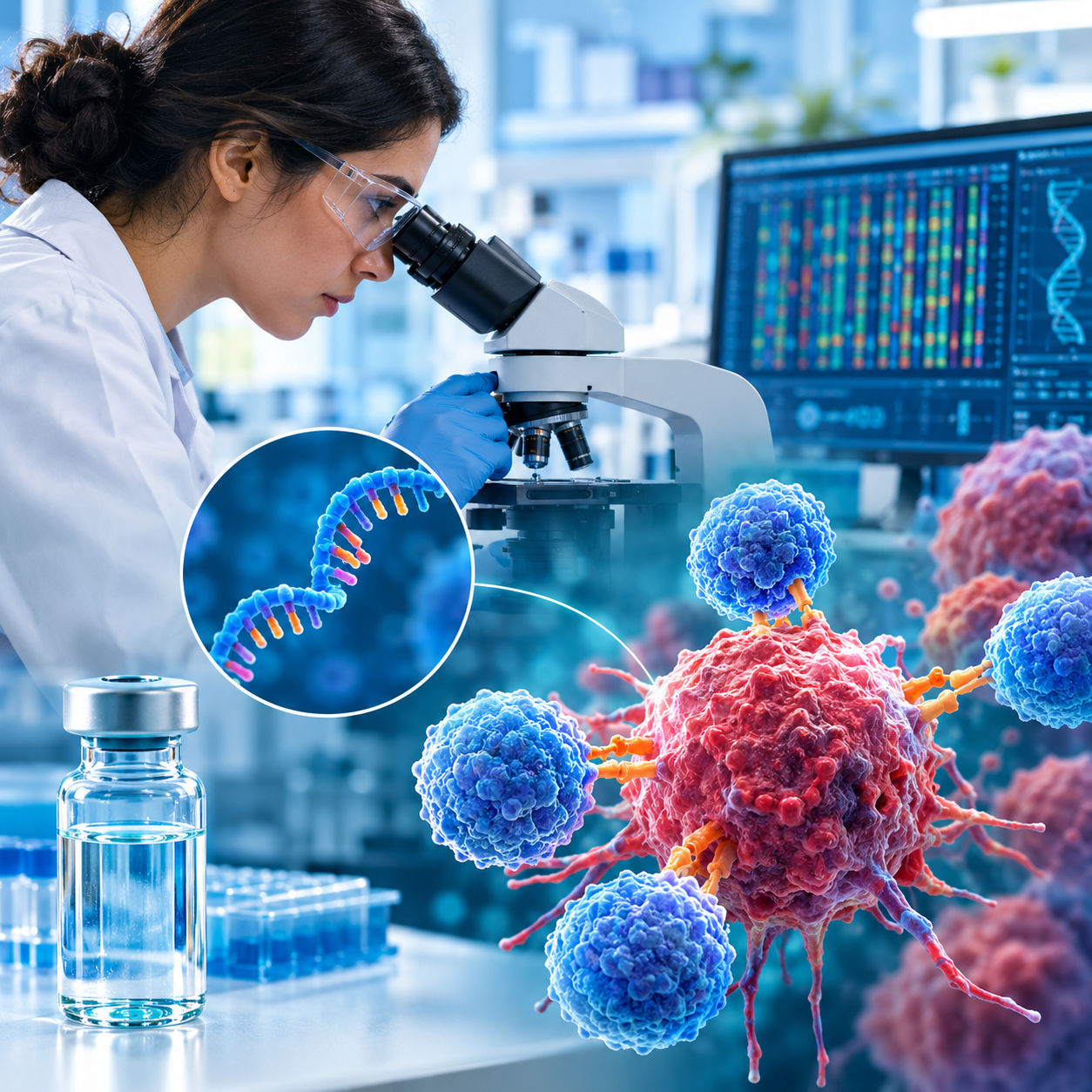
Introduction to Cancer Vaccine Breakthroughs
Cancer Vaccine Breakthroughs are creating new hope for patients by exploring ways to help the immune system recognize and attack cancer cells. Unlike traditional vaccines that mainly prevent infectious diseases, therapeutic cancer vaccines are designed to stimulate an immune response against existing cancer. Researchers are studying personalized vaccines that use information from an individual’s tumor to create more targeted treatments. These developments could improve cancer care, but important challenges remain, including treatment costs, clinical testing, and differences in how patients respond.
Cancer vaccine research is moving toward more personalized medicine. Scientists are investigating how vaccines can work alongside immunotherapy, surgery, and other treatments. Although some clinical results are encouraging, cancer vaccines are not a universal cure, and their effectiveness depends on the cancer type, vaccine design, and individual patient. Understanding these developments helps readers separate genuine scientific progress from exaggerated claims.
Table of Contents
- Understanding Cancer Vaccine Breakthroughs
- Personalized Cancer Vaccines
- mRNA Cancer Vaccine Research
- Neoantigen-Based Vaccine Development
- Combining Vaccines With Immunotherapy
- Cancer Vaccines After Surgery
- New Research in Difficult-to-Treat Cancers
- Challenges and Hidden Risks
- The Future of Cancer Vaccine Breakthroughs
- Conclusion
1. Understanding Cancer Vaccine Breakthroughs
Cancer Vaccine Breakthroughs focus on helping the immune system identify cancer cells more effectively. Cancer cells can sometimes avoid immune detection, allowing tumors to grow even when the body has defenses against abnormal cells. Researchers are designing vaccines that present specific tumor-related targets to immune cells so they can learn to recognize those targets.

There are two broad categories of cancer vaccines. Preventive vaccines, such as vaccines against human papillomavirus (HPV) and hepatitis B, can reduce the risk of certain cancers by preventing infections associated with them. Therapeutic cancer vaccines, on the other hand, are being developed to treat existing cancers by stimulating an immune response against tumor-associated targets.
The distinction is important because a vaccine that prevents an infection-related cancer does not work in the same way as a personalized vaccine designed for an existing tumor. Research into therapeutic vaccines is promising, but many approaches remain experimental and are available only through specific approved uses or clinical trials.
2. Personalized Cancer Vaccines: A Major Research Direction
Personalized cancer vaccines are designed around characteristics found in an individual patient’s tumor. Doctors and researchers can analyze tumor samples to identify genetic changes that may produce unusual proteins, known as neoantigens. These targets may help the immune system distinguish cancer cells from healthy cells.
The process can involve collecting a tumor sample, sequencing its genetic material, selecting promising targets, and manufacturing a vaccine intended to train immune cells to recognize them. The goal is to create a treatment that is more specific to the patient’s cancer rather than relying on exactly the same targets for everyone.
One potential advantage is that a personalized vaccine may target several tumor-specific features at once. This could make it harder for cancer cells to escape immune recognition by changing a single target. However, tumors can still evolve, and not every selected target produces a strong immune response.
Manufacturing time, access to genetic testing, and the cost of individualized production remain important barriers. Researchers must also determine which patients are most likely to benefit and how these vaccines should be combined with established treatments.
3. mRNA Cancer Vaccine Breakthroughs
Messenger RNA, commonly called mRNA, has become an important platform in cancer vaccine research. An mRNA vaccine provides instructions that help cells produce a selected protein or antigen. The immune system can then learn to recognize that target and may develop responses against cancer cells carrying it.
One reason scientists are interested in mRNA technology is its flexibility. When researchers identify promising tumor targets, the vaccine instructions can be designed to encode those targets. Personalized mRNA vaccines may include several selected neoantigens, potentially encouraging the immune system to recognize multiple features of a patient’s tumor.
Researchers are investigating mRNA cancer vaccines in different settings, including melanoma and other solid tumors. Some clinical studies have reported encouraging early findings, especially when personalized vaccines are combined with other immune treatments. However, results from one cancer type cannot automatically be applied to every other cancer.
An mRNA cancer vaccine is not the same as a universal cancer vaccine. Its usefulness depends on the selected targets, the patient’s immune system, the tumor’s biology, and the results of rigorous clinical trials.
4. Neoantigen-Based Cancer Vaccine Breakthroughs
Neoantigens are new protein targets that can arise from genetic changes within cancer cells. Because these targets may be absent from most healthy cells, they can offer researchers a way to direct immune responses toward a tumor.
Neoantigen-based Cancer Vaccine Breakthroughs involve identifying these unusual targets and selecting those most likely to be recognized by a patient’s immune system. Scientists use tumor sequencing, computational prediction, laboratory testing, and immune-response measurements to evaluate possible targets.
The challenge is that not every mutation creates a useful neoantigen. Some targets may not be presented effectively to immune cells, while others may fail to trigger a strong response. Tumors also contain different groups of cells, so a target found in one part of a tumor may not be present throughout the entire cancer.
Researchers are therefore exploring vaccines that include multiple neoantigens. The aim is to broaden immune recognition and reduce the chance that tumor cells will survive simply by losing one target. Clinical evidence is still needed to establish how much these strategies improve long-term outcomes in different cancers.
5. Combining Cancer Vaccines With Immunotherapy
Cancer vaccines may work differently when used with other treatments. Immunotherapy drugs called checkpoint inhibitors can help restore or strengthen certain immune responses that tumors suppress. A vaccine may encourage immune cells to recognize specific cancer targets, while a checkpoint inhibitor may help those cells function more effectively.
This combination is an active area of clinical research. Scientists are examining whether vaccines can improve immune recognition in tumors that respond poorly to existing immunotherapies. They are also studying which treatment sequence and timing may produce the best results.
However, combining treatments does not guarantee better outcomes. Some patients may experience immune-related side effects, and researchers must determine whether the potential benefit outweighs the added risks. Carefully designed clinical trials are essential to compare combination therapy with standard treatment.
For patients, the most important point is that experimental combinations should be discussed with qualified oncology teams. Treatment choices depend on the cancer diagnosis, previous therapies, overall health, and the evidence available for the particular approach.
6. Cancer Vaccines After Surgery: Reducing Recurrence Risk
Another important research direction is the use of therapeutic cancer vaccines after surgery. Even when a tumor has been removed, small numbers of cancer cells may remain undetected. Researchers are investigating whether a vaccine can train the immune system to recognize these cells and reduce the risk of the cancer returning.

This approach is sometimes studied as an adjuvant treatment, meaning it is given in addition to the main treatment. Personalized vaccines may be developed using information from the removed tumor, allowing researchers to select targets associated with that patient’s cancer.
Some clinical studies have reported encouraging findings in particular cancers, including research involving personalized vaccines and immunotherapy. Yet a reduction in recurrence must be demonstrated through appropriate follow-up and controlled clinical trials. Early immune responses alone do not prove that a vaccine improves survival.
Cancer vaccines after surgery could eventually become part of treatment plans for selected patients if further evidence confirms their benefits. Until then, patients should continue to follow their oncology team’s recommendations and should not delay established treatment in favor of an unproven vaccine.
7. Cancer Vaccine Breakthroughs in Difficult-to-Treat Cancers
Researchers are also exploring cancer vaccines for cancers that are difficult to treat, including some pancreatic cancers, brain tumors, and other aggressive diseases. These cancers can present major challenges because tumors may suppress immune activity, contain diverse cell populations, or develop in environments that limit immune-cell access.
Personalized vaccine approaches may help researchers target tumor-specific features that differ from patient to patient. Scientists are studying how to identify useful antigens, deliver vaccines effectively, and combine them with surgery, radiation, chemotherapy, or immunotherapy when appropriate.
The results vary substantially by cancer type and study. A vaccine that shows promise in melanoma, for example, cannot be assumed to work equally well in pancreatic cancer or glioblastoma. Each approach needs evidence from trials involving the relevant patient population.
For this reason, difficult-to-treat cancers remain a major priority for research, rather than a problem that cancer vaccines have already solved. Future progress will depend on reliable clinical evidence, improved vaccine design, and a better understanding of how tumors evade immune responses.
8. Cancer Vaccine Breakthroughs: Challenges and Hidden Risks
Despite the promise of Cancer Vaccine Breakthroughs, several challenges remain. Personalized vaccine production can require complex laboratory analysis, specialized manufacturing, and coordination between diagnostic and treatment teams. These steps may increase costs and create delays that matter when a cancer requires urgent treatment.
Another challenge is that patients do not all respond in the same way. Differences in tumor genetics, immune function, previous treatments, and general health can affect whether a vaccine generates a useful immune response. Some tumors may also change over time or hide from immune detection.
Side effects are another consideration. Depending on the vaccine and combination treatment, patients may experience injection-site reactions, fatigue, fever, or other effects. Treatments combined with immunotherapy can also cause more serious immune-related complications. The risks depend on the specific product and treatment plan.
Access and fairness matter, too. If personalized vaccines remain expensive or available only at specialized centers, many patients may struggle to receive them. Researchers and health systems will need to consider manufacturing capacity, affordability, clinical evidence, and equitable access.
The best approach is to balance optimism with scientific caution. A promising laboratory result or early clinical finding is a reason to continue research, not proof that a treatment is a cure.
9. The Future of Cancer Vaccine Breakthroughs
The future of Cancer Vaccine Breakthroughs may involve faster tumor analysis, improved antigen selection, and more efficient vaccine manufacturing. Artificial intelligence and computational biology may help researchers prioritize potential targets, although predictions must still be tested experimentally and clinically.
Another important goal is identifying which patients are most likely to benefit. Researchers are studying tumor characteristics, immune markers, and treatment history to improve patient selection. Better selection could help reduce unnecessary treatment and make clinical trials more informative.
Scientists are also exploring combinations that may improve the immune response while keeping side effects manageable. Future studies will need to assess meaningful outcomes, including recurrence, progression, quality of life, and survival, rather than relying only on laboratory markers.
Wider clinical use will depend on the evidence for each vaccine, its regulatory status, manufacturing quality, and whether its benefits outweigh its risks. Some personalized cancer vaccines may eventually become useful options for specific groups of patients, but there is no single vaccine that currently prevents or cures every form of cancer.
10. Conclusion: Cancer Vaccine Breakthroughs Bring Hope and Risks
Cancer Vaccine Breakthroughs represent an important area of modern cancer research. Personalized vaccines, mRNA platforms, neoantigen targeting, and combinations with immunotherapy are helping scientists explore new ways to direct the immune system against cancer.
The strongest promise lies in developing treatments tailored to particular tumors and patients. However, high costs, manufacturing challenges, variable immune responses, side effects, and the need for long-term clinical evidence remain significant obstacles.
Patients should discuss potential cancer vaccines with qualified oncology professionals and check whether a treatment is approved for their specific cancer or available through a suitable clinical trial. Scientific progress offers genuine hope, but responsible decisions depend on reliable evidence rather than headlines alone.
Leave a Reply